

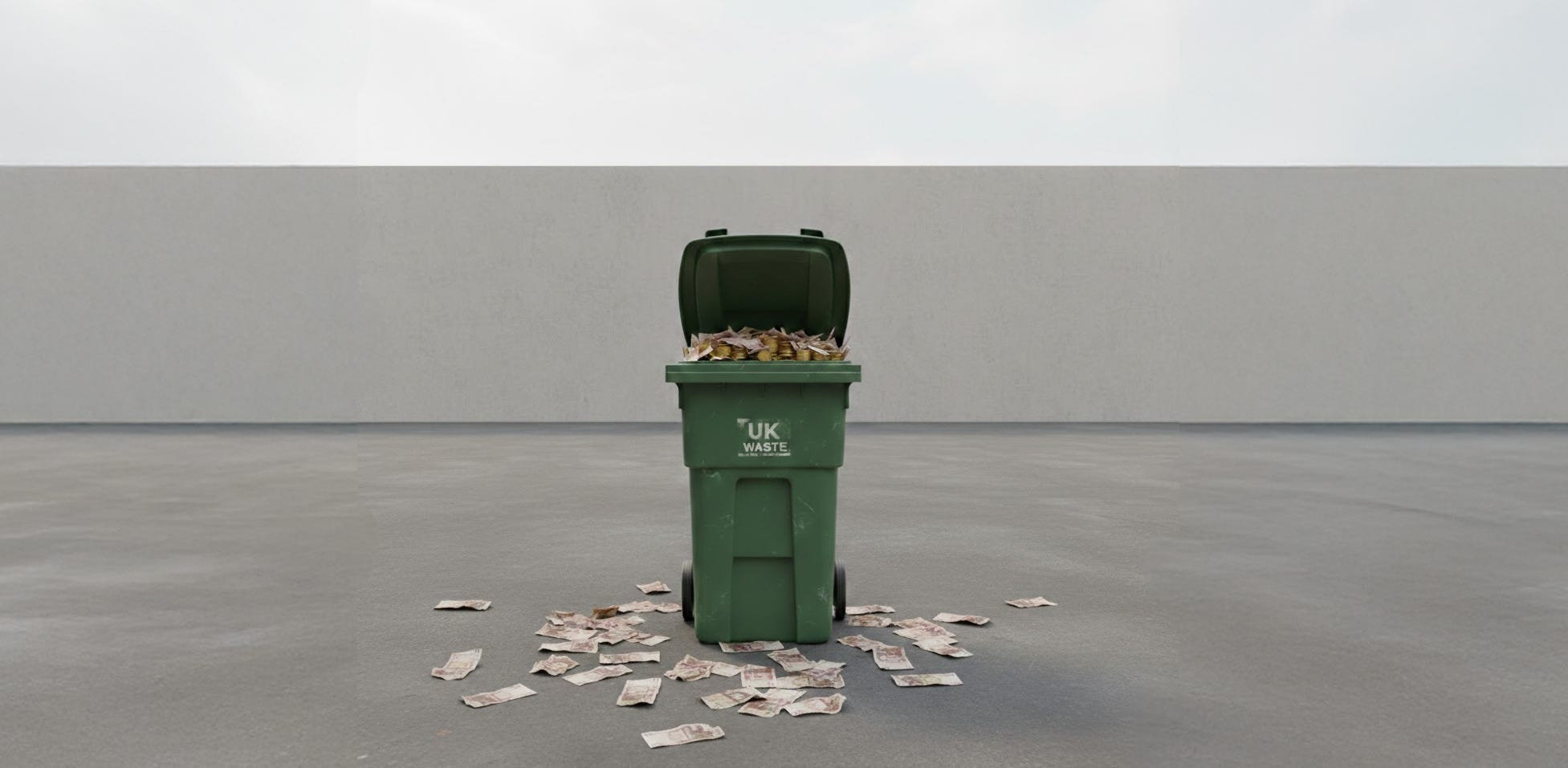
I’ve been thinking a lot about what the common thread is across my work. The urge that joins all the disparate endeavours. The underlying thesis.
I think I’ve got it
It’s “waste”
Not just the literal kind, though that’s part of it, but wasted value in its many forms. Thought I’d share the frame here.
🍟 Literal Waste The obvious one. With
CLUBZERØ, the focus is reducing physical waste in the food and beverage supply chain. With Plumen, it was about stopping people wasting energy by enticing them into choosing efficient lighting (in 2010 when this was a problem to solve).
Important work. Necessary work. But only one expression of the waste pattern.
🍔 Wasted Opportunities The value organisations miss because they’re trapped in groupthink.
At Poke, we saw Mulberry dismiss the mechanics of e-commerce as irrelevant to luxury and in doing so waste a huge opportunity to deliver genuinely exemplary digital service. We put that right, to great effect.
With Plumen, the lighting industry wasted the LED transition disruption by treating it as a purely technical upgrade, producing efficient but joyless products.
Now I’m watching car manufacturers do something similar with EVs, a once-in-a-generation opportunity to shed a skin and reinvent themselves, diluted into half measures.
🌭 Wasted Leverage This one is quieter and often more expensive.
When new platforms emerge, companies bring old playbooks instead of understanding what makes those spaces native and powerful.
Mobile became a shrunken desktop. Social media became broadcast instead of a rich conversation. Podcast advertising is sliding toward radio ads instead of embracing intimacy and native audio storytelling.
It’s squandering the leverage you already have by forcing old logic onto new mediums.
🍕 Unrealised Potential The value left on the table if you fail to connect the dots across disciplines to find the synergies, catalysts and accelerants. That’s something I’m working to fix. Most organisations can’t capture this because their structures don’t allow for cross-disciplinary thinking.
🥤 Why Framing This as Waste Matters Here’s the thing I’ve realised. Calling these “opportunities” doesn’t create enough urgency. Loss aversion is real. Organisations move faster to stop losing something than to gain something of equal value.
“You’re missing an opportunity” is interesting. “You’re actively wasting value that’s already yours” sharpens focus.
So when I look at markets in transition, EVs, audio, circular economy, I’m not just looking for opportunity. I’m looking for waste. For the value being left on the table because organisations can’t see it, won’t see it, or aren’t built to capture it.
And right now, when so many teams are battening down the hatches and playing defence, this framing feels useful.
Seeing opportunity as wasted value doesn’t make things bleak. It makes them urgent and actionable. It shifts the conversation from risk aversion to fixing the leak.
#waste